Ingebim: Powering Smart Digital Innovation
Last Updated on March 18, 2026 by Admin
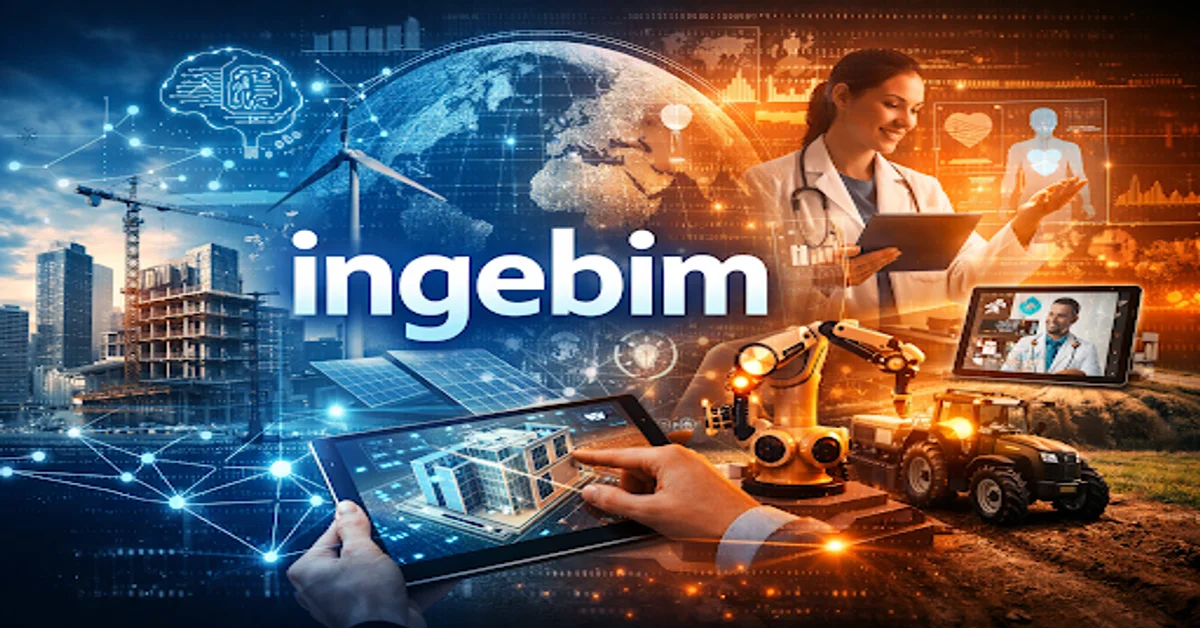
Ingebim combines BIM best practices with AI and digital twin capabilities, packaged as outcome-driven solutions focused on measurable improvements rather than tool sales. Ingebim is positioned as a forward-thinking approach—both a set of solutions and a mindset—that combines Building Information Modeling with AI, digital twins, and cloud-first workflows. Readers searching for what Ingebim is and how it works will find that Ingebim centers on streamlining complex projects, reducing waste, and accelerating decision-making across industries.
Understanding Ingebim matters because the modern industrial landscape rewards speed, accuracy, and sustainability. Whether you’re evaluating Ingebim solutions for a large infrastructure program or an Ingebim platform for a mid-sized manufacturer, the core promise is the same: smarter collaboration, measurable savings, and resilient outcomes. This article explains the vision, core technologies, industry applications, and practical steps to implement Ingebim’s digital transformation in your organization.
Digital innovation is no longer optional—it’s mission-critical. Organizations face pressure to deliver faster, greener, and more cost-effective results, which pushes them toward integrated digital systems. Ingebim responds to that demand by packaging proven technologies—like BIM, AI-driven analytics, and digital twins—into actionable workflows that deliver tangible ROI.
As construction technology trends evolve, stakeholders expect tighter coordination between design and delivery teams. Ingebim’s focus on BIM coordination and model management reduces rework, lowers risk, and shortens schedules, making it a timely answer to industry needs.
Ingebim is more than software; it’s a digital transformation playbook for organizations that want to modernize. By combining Ingebim BIM services with tailored consulting and cloud tools, the approach turns siloed datasets into shared digital assets. This transition supports lifecycle asset management and enables better long-term planning.
When companies adopt Ingebim strategies, they often see cascading benefits: faster approvals, better stakeholder alignment, and improved project forecasting. The result is not only faster delivery but a new capability to iterate, innovate, and scale across markets.
RELATED: 8158500038: What You Need to Know About
The Vision and Mission Behind Ingebim
Core philosophy and innovation strategy
At its core, Ingebim emphasizes practical innovation—solutions designed to solve immediate operational challenges while unlocking future value. The philosophy is simple: combine human-centered collaboration with automated intelligence to deliver projects that are smarter by design. This translates to a steady focus on interoperability, measurable KPIs, and continuous learning throughout each engagement.
The innovation strategy favors rapid pilots, cross-disciplinary teams, and data-driven iterations. By piloting small, high-impact projects, organizations can validate Ingebim technology before a full-scale rollout. This strategy reduces risk and creates advocates across teams who champion broader change.
Commitment to sustainability and technology
Sustainability sits at the intersection of cost savings and corporate responsibility. Ingebim integrates energy modeling, materials optimization, and renewable energy optimization techniques into project planning. The approach helps organizations meet emissions targets while cutting long-term operating costs—especially in infrastructure and commercial building portfolios.
Technology choices also reflect sustainability goals. Cloud-based platforms and digital twins reduce the need for physical mockups, minimize travel, and enable remote collaboration—practical ways embedded in the Ingebim platform to reduce a project’s carbon footprint.
Why Ingebim stands out in today’s competitive landscape
What separates Ingebim from traditional tech consultancies is its emphasis on outcome-based partnerships. Rather than selling tools alone, Ingebim focuses on delivering measurable improvements—fewer RFIs, reduced rework, and improved lifecycle asset performance. This outcome orientation builds trust and accelerates adoption.
Additionally, Ingebim combines domain expertise from construction, healthcare, energy, and agriculture to provide tailored solutions. That cross-industry perspective enables creative transfers of technology—what works for precision farming technology can often be adapted to manufacturing automation, and vice versa.
Core Technologies Powering Ingebim
Building Information Modeling (BIM)
BIM remains the backbone of the Ingebim approach. By creating a shared, data-rich 3D model, teams can coordinate design, detect clashes early, and simulate construction sequences. Ingebim BIM services emphasize clean data, standardized naming conventions, and robust model management to ensure the BIM asset remains useful throughout the project lifecycle.
Beyond coordination, BIM acts as the seed for digital twins and AI analyses, enabling lifecycle asset management. Properly implemented BIM enables downstream workflows like maintenance scheduling, energy modeling, and as-built verification—core capabilities for long-term value.
Artificial Intelligence and Machine Learning
AI-driven analytics for construction turns vast model and sensor data into actionable insights. Ingebim AI models can predict risk, optimize logistics, and flag inefficiencies before they become costly problems. In construction, these capabilities reduce delays; in manufacturing, they improve throughput; and in healthcare, they can refine telemedicine platform integration for better patient outcomes.
These systems are not magic—they require curated data, careful validation, and human oversight. Ingebim recommends iterative model training and transparent explainability so teams can trust AI recommendations and act confidently.
Digital Twins and Smart Data Integration
Digital twins extend BIM by linking the model to live operational data—sensors, IoT feeds, and systems of record. This real-time perspective supports predictive maintenance, energy optimization, and performance benchmarking. Ingebim digital twins help clients visualize performance, run scenario tests, and make lifecycle decisions with clarity.
Smart data integration also means connecting legacy systems—ERP, CMMS, and SCADA—so insights do not remain trapped in silos. The result is a single pane of glass for operations, design, and finance stakeholders.
Automation and Cloud-Based Platforms
Automation streamlines repetitive tasks like clash detection, report generation, and basic QA checks. When combined with cloud-based platforms, teams benefit from instant collaboration, centralized model storage, and scalable compute for heavy AI workloads. The Ingebim platform is designed to plug into common ecosystems (including integrations with tools like Autodesk) to minimize friction during adoption.
Cloud infrastructure also enables distributed teams to collaborate across time zones, reduces the need for large local servers, and speeds iterative experimentation—critical for organizations moving quickly through digital transformation phases.
How Ingebim Is Transforming Key Industries
Construction and Infrastructure Development
Ingebim BIM services drive higher first-pass constructability and fewer site surprises. By improving BIM coordination and model management, teams reduce costly onsite rework and accelerate commissioning. Infrastructure projects benefit from better utility mapping, clash-free designs, and scenario simulations that inform phasing and staging decisions.
These improvements translate to measurable KPIs: shorter schedules, fewer change orders, and improved stakeholder alignment—outcomes that make embedded digital practices not just innovative, but essential.
Healthcare and Telemedicine Solutions
Healthcare organizations are adopting Ingebim principles to modernize facilities and digital services. By integrating telemedicine platform integration with facility planning, hospitals can design patient flows that support remote care, optimize space usage, and improve patient outcomes. AI-driven analytics also helps in predictive equipment maintenance and capacity planning.
This convergence of physical and digital care models aligns with broader trends in health tech—better data, more accessible services, and improved provider efficiency.
Renewable Energy Optimization
Ingebim’s renewable energy technology use cases include solar farm layout optimization, wind turbine siting simulation, and energy yield forecasting. Digital twins combined with environmental data enable teams to maximize output while minimizing land use and environmental impact.
These capabilities help energy firms accelerate returns, improve grid integration, and meet sustainability targets—key priorities as markets shift toward cleaner energy sources.
Manufacturing and Smart Automation
In manufacturing, Ingebim technology supports digital thread strategies—from design to production to maintenance. Automation reduces manual handoffs, while AI identifies bottlenecks and optimizes throughput. The result is smarter production lines, reduced waste, and faster time-to-market for new products.
Companies integrate embedded sensors and analytics to support continuous improvement cycles—making manufacturing both more agile and more predictable.
Agriculture and Precision Technology
Precision farming technology benefits from Ingebim-style analytics by combining geospatial models, sensor data, and predictive insights. Farmers can optimize irrigation, reduce fertilizer use, and improve yields through better resource allocation—helping to balance productivity with environmental responsibility.
These use cases show how digital transformation practices cross-pollinate across sectors, creating solutions that are both economically and ecologically sound.
The Unique Innovation Model of Ingebim
Collaboration across disciplines
Ingebim’s strength stems from cross-disciplinary collaboration—designers, engineers, data scientists, and operations leaders working together. This collaboration reduces miscommunication and surfaces innovative ideas that single-discipline teams often miss. Workshops and co-creation sessions ensure solutions are grounded in real operational needs.
By emphasizing collaboration, Ingebim transforms technology from a siloed tool into a shared capability that delivers consistent value.
Diversity-driven creativity
Diverse perspectives fuel better problem-solving. Ingebim intentionally brings different backgrounds and viewpoints into project teams, leading to solutions that are more resilient and more widely adoptable. This diversity helps uncover blind spots and generate novel approaches to entrenched problems.
Importantly, diversity here includes domain experience—not just demographic diversity—which ensures solutions are technically sound and operationally relevant.
Open innovation and strategic partnerships
Partnerships accelerate learning. Ingebim embraces open innovation—partnering with academic institutions, vendors, and other industry leaders to co-develop solutions faster. Strategic alliances with established platforms enable smoother integrations and reduce deployment risk.
This networked approach accelerates capability-building for clients and keeps Ingebim solutions aligned with industry standards.
Agile development processes
Agile methods enable quick wins and continuous improvement. Ingebim favors short delivery cycles, frequent stakeholder feedback, and measurable outcomes. This iterative approach turns theoretical benefits into real, demonstrable results quickly—lowering the barrier to wider adoption.
Real-World Applications and Case Studies of Ingebim
Infrastructure efficiency improvements
One large transit authority used Ingebim-style processes to coordinate dozens of contractors across an urban rail upgrade. By establishing a single BIM source of truth and automating clash detection, the project reduced schedule slippage and cut change-order costs significantly. The digital-first approach streamlined approvals and improved transparency for all stakeholders.
Electric vehicle and battery performance enhancements
An automotive partner applied Ingebim AI for building information modeling and systems analysis to refine battery pack thermal performance. Simulation-led design and data-driven testing helped improve battery efficiency and extend lifecycle projections—demonstrating how embedded analytics can accelerate EV innovation.
AI-powered healthcare systems
A regional health network used integrated modeling and analytics to redesign patient flow and telemedicine operations. The embedded telemedicine integration reduced wait times and improved appointment utilization, while predictive maintenance kept vital equipment online. Together these changes improved patient satisfaction and lowered operational costs.
Sustainable farming transformations
An agricultural cooperative applied precision farming technology with sensor-driven models to reduce water use while increasing crop yields. The cooperative used spatial analytics and predictive weather modeling to optimize planting and irrigation schedules—resulting in measurable efficiency gains and reduced environmental impact.
Global Impact of Ingebim
Expansion into emerging markets
Ingebim enables scalable solutions suitable for both developed and emerging markets. In regions with infrastructure gaps, digital twins and model-based planning help accelerate program delivery with limited resources. Localized deployments adapt to cultural and regulatory contexts, helping projects deliver meaningful outcomes faster.
Driving sustainable growth worldwide
By embedding efficiency and resource optimization into design workflows, Ingebim supports sustainable growth. Renewable energy optimization and materials efficiency are just two areas where digital strategies produce both economic and environmental returns.
Strengthening digital ecosystems across industries
Ingebim isn’t an island—it strengthens ecosystems by connecting design tools, operational systems, and analytics platforms. These integrated ecosystems create fertile ground for innovation and allow organizations to respond nimbly to changing market conditions.
Benefits of Adopting Ingebim Solutions
Increased productivity and cost efficiency
Adopting Ingebim solutions results in fewer delays, less rework, and more predictable outcomes. Automation and BIM coordination translate into direct cost savings and stronger margins.
Data-driven decision-making
With integrated models and AI-driven analytics, stakeholders make better decisions earlier in the project lifecycle. This reduces surprises and aligns spend with strategic priorities.
Improved project lifecycle management
From planning to decommissioning, Ingebim supports lifecycle asset management—ensuring that investments continue to deliver value long after initial construction or deployment.
Competitive advantage in evolving markets
Organizations that adopt Ingebim early gain agility and can respond faster to market shifts, new regulations, and sustainability demands—delivering a clear competitive edge.
Challenges Ingebim Addresses in Modern Industries
Operational inefficiencies
Many large programs suffer from fragmented processes and manual handoffs. Ingebim’s integrated approach eliminates duplication and speeds workflows.
Data silos and poor collaboration
Siloed data creates rework and mistrust. By centralizing model data and connecting systems, Ingebim breaks down barriers and unites teams around a single source of truth.
Environmental sustainability concerns
Ingebim embeds energy and materials optimization into planning—helping projects meet sustainability targets without sacrificing performance.
Scalability limitations
Traditional tools often fail to scale across portfolios. Ingebim’s platform approach supports phased rollouts and governance frameworks that sustain growth.
Future Trends and Roadmap for Ingebim
Expansion of AI capabilities
AI will increasingly automate routine decisions and augment expert judgment. Ingebim will continue to expand AI support for forecasting, risk analysis, and performance optimization across sectors.
Smart cities and digital infrastructure
Digital twins and connected infrastructure will form the backbone of smarter cities. Ingebim practices will be central to planning, delivering, and operating resilient urban systems.
Sustainability-first technology
Expect deeper integration of carbon accounting, circular materials strategies, and renewable optimization features as embedded functionality within Ingebim solutions.
Research and development investments
Ongoing R&D—paired with partnerships—will keep Ingebim offerings at the cutting edge and ensure they remain aligned with industry standards and emerging best practices.
How to Implement Ingebim in Your Organization
Step-by-step adoption strategy
Start with a focused pilot: identify a high-impact project, set measurable goals, and assemble a cross-functional team. Validate outcomes, document lessons, and scale with a repeatable playbook that includes governance and training.
Integration with existing systems
Seamless integrations—such as linking BIM models with CMMS or ERP—are essential. Ingebim emphasizes pragmatic connectors and standards-based exports to reduce friction and preserve business continuity.
Integration with Autodesk
Many organizations pair Ingebim workflows with major design tools, ensuring smooth data exchange and familiar interfaces. Integration with established tools reduces change management friction and accelerates time to value.
Building a collaborative innovation culture
Leadership must visibly support change, recognize early wins, and invest in training. Encourage cross-functional problem-solving workshops and celebrate iterative progress to sustain momentum.
Measuring success and ROI
Define KPIs—reduced RFIs, fewer change orders, schedule adherence, and lifecycle cost savings. Regularly review outcomes against targets and use outcomes to refine the implementation roadmap.
RELATED: 9.7.4 Leash: The Ultimate Guide to Dog Obedience
Frequently Asked Questions
Is Ingebim suitable for small businesses?
Yes—Ingebim’s modular approach supports pilots and scaled rollouts, making it accessible to small and mid-sized organizations that want targeted efficiency gains.
How does Ingebim support sustainability?
By integrating energy modeling, materials optimization, and renewable energy optimization into planning workflows, Ingebim helps reduce carbon footprints and operating costs.
What industries benefit the most from Ingebim?
Construction, infrastructure, healthcare, renewable energy, manufacturing, and agriculture all see meaningful benefits from embedded digital workflows.
Summary
Ingebim is a pragmatic, optimism-driven approach to digital transformation. By marrying BIM with AI, digital twins, and cross-disciplinary collaboration, it helps organizations deliver faster, greener, and more predictable results.
As industries digitize, the value of integrated model-based approaches will multiply. Organizations that adopt Ingebim’s early position themselves to lead in efficiency, sustainability, and innovation.
Innovation without limits is possible when teams combine discipline with curiosity. Ingebim offers a clear path: start small, measure rigorously, scale thoughtfully, and use technology to amplify human expertise.