9.7.4 Leash: The Ultimate Guide to Dog Obedience
Last Updated on March 15, 2026 by Admin
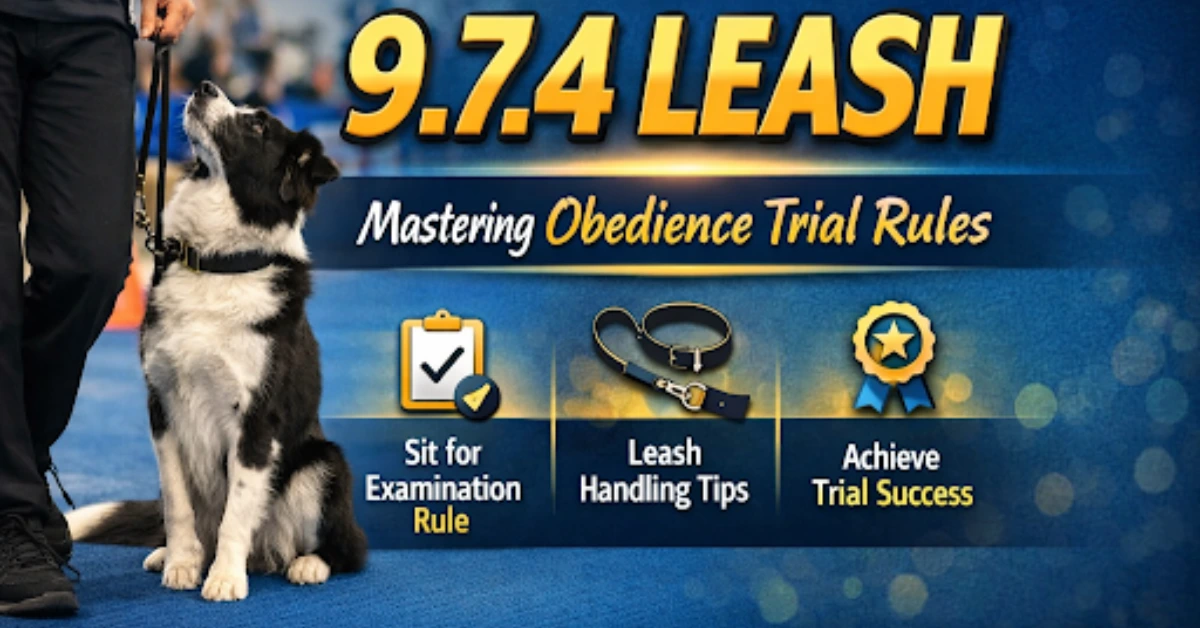
9.7.4 leash is a rule in dog obedience trials that explains how a handler must hold and control the leash during the Sit for Examination exercise. This rule ensures that both the dog and handler maintain proper posture, control, and safety throughout the trial. Recognized across major dog organizations, it is essential for anyone participating in obedience competitions to understand and master this rule.
In essence, 9.7.4 leash is not just a technical guideline—it represents the precision and discipline required in dog handling. Competitors rely on this rule to demonstrate their dog’s obedience, responsiveness, and training level in a structured environment.
Understanding obedience trial rules, including 9.7.4 leash, is critical for both novice and experienced handlers. These rules form the backbone of competitive trials, guiding judges in evaluating performance objectively. Knowledge of the leash rule helps prevent penalties, ensures the safety of participants, and elevates the overall performance in obedience exercises.
Moreover, adhering to these rules strengthens communication between dog and handler. Clear leash handling signals confidence, consistency, and control, which are highly valued in formal trials.
Leash regulations in dog obedience trials are designed to maintain uniformity, fairness, and safety. Whether governed by the Canadian Kennel Club, American Kennel Club, or the Canine Coaching Club, these regulations outline acceptable leash types, lengths, and handling techniques. They also detail how the leash should be held, when it must remain clear of the floor, and how it integrates into exercises such as sit, stay, and heel.
For competitors, understanding these regulations is as important as practicing the exercises themselves. Knowledge of leash standards can make the difference between an exceptional performance and unnecessary deductions.
RELATED: 8.3 Independent Practice Page 221 Answer Key Explained
The 9.7 Sit for Examination Rule Explained
Understanding Section 9.7 of Obedience Trials
Section 9.7, commonly referred to as the Sit for Examination rule, is a cornerstone of obedience trials. It evaluates a dog’s calmness, discipline, and responsiveness when approached by a judge. Dogs must remain in a sit position while the judge inspects them, ensuring they are well-trained and compliant.
This exercise tests both physical control and mental discipline, and it requires precise handling of the leash, as described in subsection 9.7.4.
Role of 9.7.4 within the Sit for Examination Exercise
The 9.7.4 leash rule specifically governs how the leash should be handled during the sit-for-examination exercise. It stipulates that the leash must be held in a manner that allows free movement of the handler while keeping the dog secure. The rule emphasizes keeping the leash clear of the floor, preventing distractions, and demonstrating polished leash etiquette.
Proper execution of 9.7.4 ensures judges can safely approach the dog while maintaining control. It also reflects a handler’s understanding of formal obedience trial protocols, which is critical for achieving high scores.
Step-by-Step Breakdown of 9.7.4 Leash Instructions
Start Position: The dog sits calmly at heel, leash in hand.
Judge Approach: As the judge approaches, the leash should remain held above the floor, maintaining a relaxed but secure grip.
Handler Movement: The handler may walk around the dog as instructed, keeping the leash taut enough to prevent slack but loose enough to avoid tension.
Completion: After the examination, the handler resumes standard heel position on leash, following the obedience ring leash instructions.
Official Guidelines from Dog Organizations
Canadian Kennel Club (CKC) Leash Rules
The Canadian Kennel Club provides detailed guidance on obedience trials, including leash handling. Their rules for 9.7.4 emphasize safety, proper grip, and maintaining the leash clear of the floor. The CKC guidelines ensure that all competitors perform consistently and fairly.
Additionally, the CKC advises handlers to practice leash-on sit-for-exam exercises extensively, focusing on smooth execution, minimal distractions, and positive reinforcement.
American Kennel Club (AKC) Obedience Leash Standards
The American Kennel Club enforces strict leash requirements for dog shows and trials. These standards define acceptable leash materials, lengths, and handling techniques. AKC rules stress the importance of keeping the leash clear of the floor, precise heel positioning on leash, and adherence to obedience leash commands during exercises.
For AKC participants, compliance with these rules is crucial to avoid point deductions, ensuring competitive fairness and safety.
Other Kennel Clubs and Their Leash Regulations
Organizations like the Canine Coaching Club and the Pima County 4H Dog Project also maintain obedience guidelines with explicit leash standards. While specific rules may vary slightly, all emphasize controlled leash handling, proper positioning during exercises, and adherence to trial etiquette. Competitors benefit from familiarizing themselves with multiple organizations’ rules, especially if they participate in diverse competitions.
Types of Leashes Used in Obedience Trials
Standard 6-Foot Leash
The standard 6-foot leash is the most commonly used in obedience trials. It provides sufficient control without restricting the dog’s movement. Handlers must ensure the leash is held correctly to maintain the leash-held clear of floor requirement.
Non-Retractable Leashes
Non-retractable leashes are preferred in formal obedience competitions. They offer consistent tension and reduce distractions, allowing the dog to focus on commands. These leashes also meet most CKC and AKC guidelines for trial exercises.
Slip Collars vs. Martingale Collars
While slip collars are sometimes used in training, martingale collars are recommended in obedience trials for enhanced safety and control. They prevent the leash from slipping while maintaining comfort, which is critical during exercises like sit-for-examination.
Choosing the Right Leash for Competitions
Selecting the appropriate leash depends on your dog’s size, behavior, and trial regulations. Always consult official guidelines and practice leash training obedience exercises to ensure compliance with competitive rules.
Importance of Leash Handling in Obedience Trials
Safety of Handler and Dog
Proper leash handling prevents accidents, injuries, and distractions in the ring. By adhering to rules like 9.7.4 leash, handlers ensure the dog remains secure and the judge can safely perform examinations.
Maintaining Control During Trial Exercises
Leash handling is central to control. A correctly held leash allows smooth transitions between exercises, maintains heel position on leash, and ensures obedience commands are effectively communicated.
Compliance with Judges’ Instructions
Judges evaluate both the dog and handler. Proper leash handling demonstrates professionalism, attentiveness, and respect for competition protocols, all of which contribute to higher scores.
Leash Training Techniques for Obedience
Loose Leash Walking
Loose leash walking tips emphasize walking without tension, encouraging calm behavior and responsiveness to commands. Practicing this technique reinforces leash etiquette in trials.
Heel Command and Leash Position
Leash heel training teaches dogs to remain at a handler’s side while maintaining proper leash length. This skill is crucial for obedience trial exercises, particularly sit-for-examination.
Sit and Stay with Leash Control
Training dogs to sit and stay with leash-on guidance builds confidence and focus. Handlers can ensure compliance without excessive restraint, aligning with official leash rules.
Preventing Leash Pulling and Leash Reactivity
Positive reinforcement training reduces leash reactivity and pulling. Reinforcing desired behaviors promotes calmness, enhances obedience, and ensures the handler meets trial leash standards.
Common Mistakes in Leash Handling
Incorrect Leash Length or Type
Using an improper leash can cause control issues and penalties. Always select a leash that meets CKC and AKC specifications for competitive obedience.
Poor Leash Grip or Positioning
Holding the leash incorrectly can create tension or slack, affecting the dog’s performance and violating rules like 9.7.4 leash.
Misunderstanding Trial Instructions
Failing to understand leash instructions during sit-for-examination exercises may result in lost points. Familiarity with official guidelines is key to success.
Leash Behavior in Public vs. Competition
Differences Between Obedience Trial and Public Leash Rules
While competitive trials require strict leash handling, public spaces often have different expectations. Understanding both ensures safety and proper dog behavior in all environments.
City Leash Laws and Ordinances
Local leash laws may dictate maximum leash lengths, mandatory use in public areas, and fines for violations. Knowledge of these laws complements obedience training.
Leash Etiquette in Public Spaces
Good leash etiquette reinforces positive socialization, control, and respect for others, echoing the discipline cultivated through obedience trials.
Advanced Obedience Exercises Involving a Leash
Recall Exercises with Leash
Recall training with a leash improves responsiveness and strengthens handler-dog communication. It also aligns with formal obedience trial standards.
Off-Leash Transition After Competition
Transitioning from leash-on to off-leash exercises teaches dogs independence while retaining control, a key aspect of advanced obedience training.
Long Line Training for Intermediate Dogs
Using a long line allows practice of distance control while maintaining safety and adherence to leash rules.
Benefits of Mastering the 9.7.4 Leash Rule
Better Trial Performance
Precision in leash handling directly contributes to higher scores, demonstrating discipline and preparedness.
Stronger Dog-Handler Communication
Following leash rules enhances trust, responsiveness, and mutual understanding between dog and handler.
Safer and More Enjoyable Dog Experience
Correct leash management reduces stress, improves safety, and makes competitions more enjoyable for both dog and handler.
RELATED: Erpoz: Simplify Business with Cloud ERP
Frequently Asked Questions
What is the correct leash length for 9.7.4?
Most organizations recommend a standard 6-foot leash for optimum control and compliance.
Can you use a retractable leash in obedience trials?
No, non-retractable leashes are preferred for safety and consistency in competitive settings
How is 9.7.4 scored by judges?
Judges evaluate leash control, tension, positioning, and adherence to the sit-for-examination protocol.
Differences between CKC and AKC leash rules?
Both emphasize safety, proper grip, and clear leash handling. AKC may have stricter guidelines on materials and trial-specific commands.
Summary
The 9.7.4 leash rule is a fundamental component of competitive dog obedience. Mastery of this rule ensures compliance, safety, and superior trial performance.
Consistent leash training reinforces obedience, improves handler-dog communication, and instills confidence in both participants during trials.
Success in obedience trials relies on discipline, knowledge, and proper leash handling. By following expert guidelines from the Canadian Kennel Club, American Kennel Club, Canine Coaching Club, and Pima County 4H Dog Project, handlers can ensure their dogs perform confidently, safely, and successfully in every competition.